Spider Veins and Varicose Veins: Your Complete Guide to Leg Vein Treatment in Burlington
Quick Answer: Leg Vein Treatment at Luna Med Spa Burlington
Sclerotherapy is the gold-standard, minimally invasive treatment for spider veins, reticular veins, and small-to-moderate varicose veins on the legs.
A Health Canada-approved sclerosing solution is injected directly into the targeted vein, causing it to collapse, seal, and gradually fade over weeks to months.
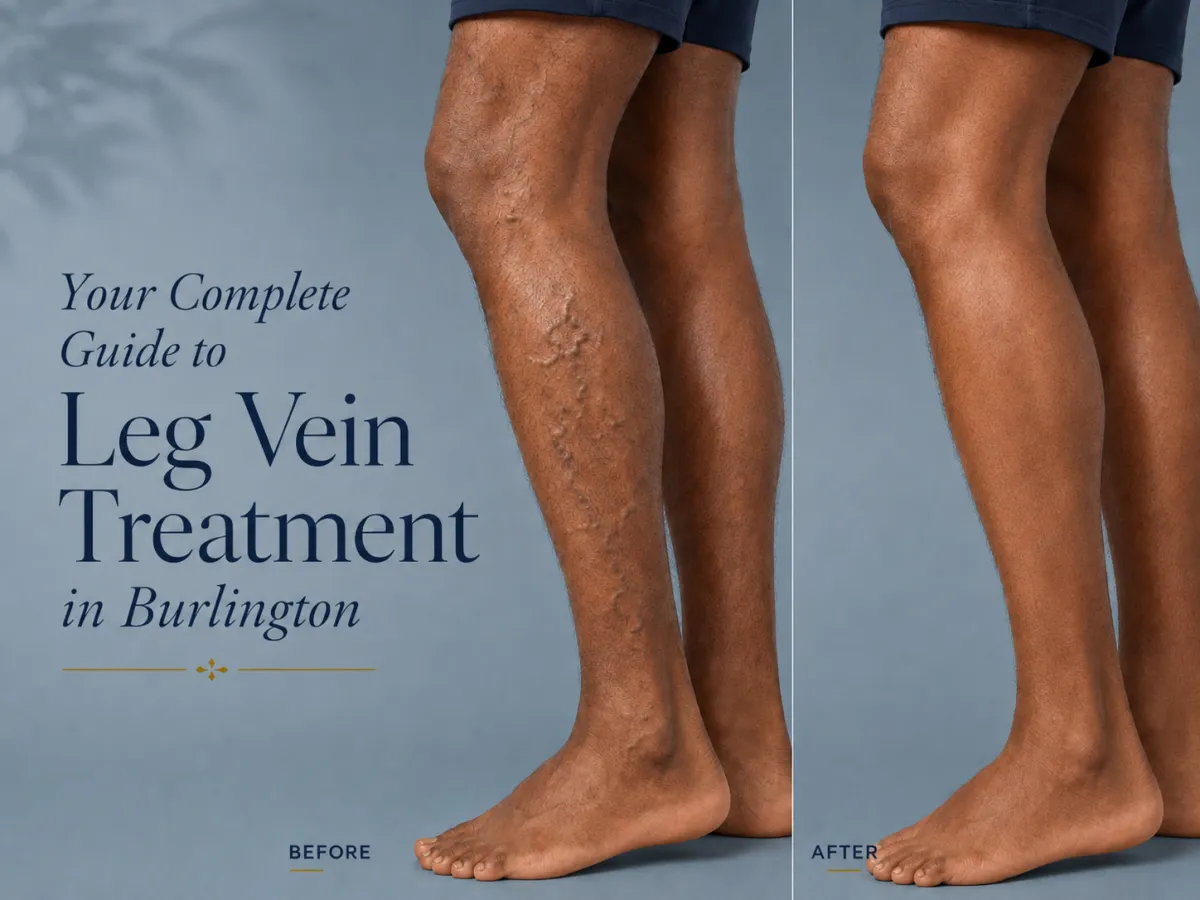
Spider veins typically fade in 3-6 weeks. Varicose veins can take 3–4 months to fully clear. Most clients need 2-4 sessions.
Luna Med Spa treats leg veins only, we do not offer spider vein treatment for the face.
All treatments are performed by Registered Nurses (RN/RPN) under Medical Director supervision.
Luna Med Spa specializes in sclerotherapy for leg veins, including spider veins, reticular veins, and varicose veins of the lower limbs. We do not offer treatment for facial spider veins or rosacea. If you are seeking facial vein treatment, we recommend consulting a dermatology or laser clinic.
Understanding Leg Veins: The Three Types We Treat
Not all leg veins are the same, and understanding the difference matters, because each type behaves differently, responds differently to treatment, and requires a different clinical approach. At Luna Med Spa Burlington, our Registered Nurses assess all three vein types at your initial consultation before recommending a treatment plan.
Spider Veins (Telangiectasias)
Spider veins are the fine, web-like networks of tiny, dilated blood vessels visible close to the surface of the skin. They appear in shades of red, purple, or blue, and are named for their branching, web-like pattern. On the legs, they most commonly appear on the thighs, calves, and behind the knees.
Spider veins are primarily cosmetic, they don't typically cause physical symptoms, though some clients report mild aching or burning in the area, particularly after prolonged standing. They can affect a small patch or cover a large area of the leg.
Reticular Veins (Feeder Veins)
Reticular veins are the blue-green, slightly larger vessels that lie just beneath spider veins. They are the feeding vessels that supply blood to spider veins, and this relationship is critical to understand. Treating spider veins without addressing their underlying reticular feeders is one of the main reasons spider veins return quickly after treatment.
At Luna Med Spa, our Registered Nurses assess and treat reticular feeder veins as part of every sclerotherapy plan, not just the surface-visible spider veins. This is what produces lasting results rather than temporary clearance.
Varicose Veins
Varicose veins are larger, sometimes bulging or rope-like veins that sit closer to the surface than the deep venous system. They develop when the one-way valves inside leg veins stop functioning properly, causing blood to pool and the vein to dilate over time. Unlike spider veins, varicose veins frequently cause physical symptoms:
Aching, throbbing, or heaviness in the legs, especially after prolonged standing.
Swelling in the ankles or lower legs by end of day.
Itching or burning over or around the vein.
Leg restlessness or cramping, particularly at night.
Skin changes near the ankle, darkening, thickening, or dryness in more advanced cases.
For clients with symptomatic varicose veins, treatment isn't purely cosmetic, it addresses an underlying venous function problem. Our clinical assessment determines whether sclerotherapy is the appropriate treatment or whether you need a referral to a vascular surgeon or specialist for evaluation first.
What Causes Spider and Varicose Veins on the Legs?
Leg vein conditions are extremely common, affecting an estimated 30–40% of adults in Canada, and they are primarily driven by factors largely outside your control. Understanding the causes helps set realistic expectations: treatment clears existing veins, but it cannot prevent new ones from forming over time.
What Is Sclerotherapy and How Does It Treat Leg Veins?
Sclerotherapy has been the gold-standard treatment for leg spider veins and varicose veins for nearly a century, and modern techniques and Health Canada-approved sclerosing solutions have made it safer, more precise, and more effective than ever.
The procedure involves injecting a sclerosing solution directly into the targeted vein using a very fine needle. The solution chemically irritates the inner lining of the vein wall, causing it to swell, seal shut, and collapse. Over the following weeks and months, the collapsed vein is broken down and reabsorbed by the body's natural processes, gradually fading from view.
Blood is simultaneously rerouted through the surrounding healthy, deep venous system, which not only improves the appearance of the leg but often improves circulation in the treated area as well.
How the Sclerosing Solution Works
At Luna Med Spa Burlington, we use only Health Canada-approved sclerosing solutions. The concentration and volume of solution used is customized to the size, depth, and type of vein being treated, spider veins require a lower concentration than larger reticular or varicose veins. This calibration is one of the most important factors in achieving effective results while minimizing side effects like hyperpigmentation.
The Treatment Session
Each session involves multiple small injections across the treatment area. Sessions typically take 30–60 minutes depending on the extent of veins being treated. Your Registered Nurse will map the vein network before treatment, identifying both the visible spider veins and the underlying reticular feeders, to ensure a systematic approach that addresses the source, not just the surface.
Most clients describe the sensation as a brief sting or mild burning at each injection point. A topical numbing cream can be applied beforehand for clients who prefer additional comfort.
Treating Spider Veins vs. Varicose Veins: What's Different?
Both spider and varicose veins are treated with sclerotherapy at Luna Med Spa Burlington, but the clinical approach, the number of sessions required, and the timeline for results differ meaningfully between the two.
A Note on Varicose Veins and Venous Insufficiency
Some varicose veins are caused by underlying venous insufficiency, a condition where the valves in the deep leg veins are not functioning properly, causing chronic backward blood flow. In these cases, treating surface varicose veins without addressing the underlying insufficiency will produce poor results, as the dysfunctional deep system will continue to cause surface veins to refill.
At your consultation, our Registered Nurses screen for signs of venous insufficiency. If we suspect this is a factor, we will refer you for a vascular ultrasound assessment before proceeding with sclerotherapy. We would rather give you an accurate picture upfront than proceed with treatment that won't hold.
Why Compression Stockings Are Non-Negotiable After Sclerotherapy
If there is one thing Burlington clients should understand before their first sclerotherapy session, it's this: compression stockings are not optional. They are clinically essential to the success of your treatment, not a minor afterthought.
Immediately following your session, medical-grade compression stockings (typically 20–30 mmHg) are applied at the clinic. Here is what they do:
Keep the treated vein closed: Compression prevents blood from re-entering the collapsed vein before the walls have permanently sealed.
Reduce bruising and swelling: Graduated pressure supports tissue and minimizes post-treatment inflammation.
Improve long-term efficacy: Studies consistently show significantly better clearance rates in clients who comply with compression protocols.
Reduce hyperpigmentation risk: Compression minimizes the pooling of haemosiderin (iron deposits) from treated veins that causes brown staining on the skin.
Your nurse will provide specific instructions on how long to wear stockings, when you can remove them, and how to care for the treated legs in the days following each session.
What to Expect: Your Sclerotherapy Journey at Luna Med Spa Burlington
Common Side Effects and What to Expect
Sclerotherapy is a medical procedure, and some post-treatment effects are expected and normal. Understanding them in advance makes for a far more comfortable experience.
Serious complications, including deep vein thrombosis (DVT), significant allergic reactions, or skin ulceration, are rare when sclerotherapy is performed by a trained medical professional using appropriate clinical protocols. At Luna Med Spa, every treatment is performed by a Registered Nurse with specialized vascular training, under the supervision of Medical Director.
How Many Sclerotherapy Sessions Will I Need?
The number of sessions depends on the type of veins being treated, the extent of the vein network, and how your body responds to treatment. Our Burlington nurses are always direct about this at consultation, we don't over-promise clearance timelines.
Sessions are spaced to allow full assessment of clearance before re-treating. Your nurse tracks progress at each visit and adjusts the plan based on how your body is responding. Varicose veins are typically treated before spider veins in the same area, addressing the source before the surface.
Who Should Not Have Sclerotherapy?
Sclerotherapy is safe for most adults, but it is not appropriate for everyone. Our Registered Nurses screen all clients carefully at consultation. Treatment is not suitable for clients who have:
Active pregnancy, sclerotherapy is deferred until after delivery and the completion of breastfeeding.
A history of deep vein thrombosis (DVT) or pulmonary embolism, must be assessed before any vein treatment.
Known severe allergy to the sclerosing agent being used.
Significant arterial disease or severely compromised blood flow in the lower limbs.
Active skin infection or open wound in the treatment area.
History of Keloids formation.
Inability to walk or wear compression stockings post-treatment, both are required for safe outcomes.
Venous insufficiency: If underlying venous insufficiency is suspected, particularly for clients with extensive or symptomatic varicose veins, we may recommend a vascular ultrasound assessment before proceeding. Treating surface veins over a dysfunctional deep system produces poor, short-lived results. We would rather identify this upfront.
When Is the Best Time to Get Leg Vein Treatment in Burlington?
Spring is widely considered the optimal time to begin sclerotherapy, and there are practical reasons beyond seasonality. Compression stockings are required after every session, and wearing them consistently is far more manageable in cooler Ontario weather than in the heat of summer.
Beginning treatment in spring also allows the full result cycle to complete by summer, when most clients want to feel comfortable and confident in shorts, skirts, and swimwear. Results from spring treatments are typically visible by June or July.
That said, Luna Med Spa offers sclerotherapy year-round, and fall treatments are also popular, allowing clearance to develop over winter for a fresh result by the following spring. We will accommodate the timing that works best for your schedule.
Frequently Asked Questions: Leg Vein Treatment in Burlington
Do spider veins or varicose veins come back after sclerotherapy?
Treated veins are permanently closed and will not return. However, new spider and varicose veins can develop over time, this is a normal part of aging and venous biology, particularly if you have a genetic predisposition. Most clients benefit from periodic maintenance sessions every 1–2 years as new veins form. Wearing compression stockings, staying active, and maintaining a healthy weight all help slow the progression of new veins.
Can sclerotherapy treat all varicose veins?
Sclerotherapy is effective for small-to-moderate varicose veins. Larger, deeper varicose veins, particularly those associated with significant venous insufficiency, may require endovenous laser ablation (EVLA) or surgical treatment, which are performed by vascular surgeons. At your consultation, our nurses will assess whether your varicose veins are appropriate for sclerotherapy or whether a vascular surgery referral would better serve your outcome.
Is sclerotherapy covered by OHIP or extended health benefits in Ontario?
Cosmetic sclerotherapy for spider veins is not covered by OHIP. However, if your varicose veins are causing medically significant symptoms, significant aching, swelling, skin changes, or have led to superficial thrombophlebitis, treatment may be partially covered under extended health benefit plans. We recommend checking with your insurer. We can provide appropriate clinical documentation at your consultation to support a benefits claim where applicable.
How soon can I return to work and exercise after sclerotherapy?
Most clients resume sedentary work the same day or the following day. A 20–30 minute walk is encouraged immediately after treatment. Vigorous exercise, running, cycling, heavy weightlifting, hot yoga, should be avoided for 48 hours. After that, normal physical activity resumes. Walking throughout the recovery period actively supports the treatment by promoting healthy circulation in the legs.
Do you treat facial spider veins at Luna Med Spa Burlington?
No, Luna Med Spa specializes exclusively in leg vein treatment. We do not offer sclerotherapy or other treatments for facial spider veins, rosacea, or facial telangiectasias. Facial spider veins are best treated with laser or IPL, which require different equipment and clinical expertise. We recommend consulting a dermatology clinic or laser centre for facial vein concerns.
Why do my spider veins look worse right after treatment?
This is one of the most common concerns clients raise after their first session, and it's completely normal. In the first 1–3 weeks after treatment, the area may appear more bruised, darker, or more vein-visible than before treatment as the inflammatory response works through the tissue. This is not a sign that treatment has failed. The treated vein darkens temporarily before fading. By weeks 3–6, you should begin to see noticeable clearance.
Where can I get sclerotherapy for spider and varicose veins near Burlington, Ontario?
Luna Med Spa is located at 3455 Harvester Rd, Unit 10, Burlington, Ontario. We offer sclerotherapy for leg spider veins, reticular veins, and varicose veins, performed by Registered Nurses under the supervision of Medical Director Vijeta Singh, NP-PHC, MScN. We serve Burlington, Oakville, Hamilton, Milton, and the Halton Region. Book your complimentary consultation at lunamedspa.janeapp.com or call 905-981-8454.
Ready to Do Something About Your Leg Veins? Book a Free Consultation.
Your consultation at Luna Med Spa Burlington begins with a thorough clinical assessment of your veins, spider veins, reticular feeders, and varicose veins, and an honest treatment plan with realistic timelines before you commit to anything. No pressure. Just clear answers.
3455 Harvester Rd, Unit 10, Burlington, Ontario L7N 3P2